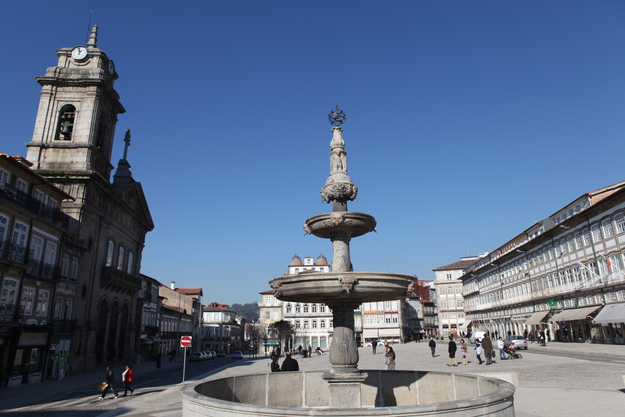
As a kid I remember my schoolmates showing
theirs, proudly activating the faint green light which we saw flickering through
the dark hollow made with our hands. It was a symbol of a certain kind of
modernity, a type of civilization which only then Portugal had fully entered: technological
civilization for sure, but also the worldwide market of cheap eastern gadgetry.
In personal terms, and for little kids who had just learnt how to count, a
watch was also the first tangible sign of independence: if not sovereignty over
time (by then we still naively thought we would conquer it one day) at least
awareness of its passing. I thought however, at the time, that the facilitated
reading of the time afforded by a digital watch was cheating somehow: from the
very beginning I preferred the complicated turning around of hour, minute and
second hands one can see on analogue watches. I never had a Casio F-91W as a
kid, I never asked my parents for one. Until rather recently I consistently
relied on freebie watches or Chinese ones which hopefully would last for some months.
On my early twenties I was finally offered my first adulthood watch: a black analogue
Pulsar, and then two more watches came along, a blue Swatch and a brown, rather
more classic French one. The last time I remember thinking about the Casio F-91W
was around September 2001 and the reasons couldn’t be worse: bin Laden wore one
in one of the videos in which he appeared, with his finger pointing up,
threatening the West. I remember commenting on that with some friends back in
high school: couldn’t he at least afford a better watch? The watch became
suspicious in America on account of that, years after its appearance marked the
end of a certain kind of American international supremacy: the rise of the
East with the ensuing global bombardment of cheap plastic. Lately I decided to
buy one: I needed a cheap watch, with a clearly visible stopwatch to jog with. I
was slightly disappointed to see that they aren’t manufactured in Japan anymore
(were they ever?), the inevitable “made in China” glittering on its back. It is
still interesting though, its retro-futuristic style marking a past perception
of what the future would be. It turned out to be quite different, but then that’s
a secret in time that watches don’t tell.
Wednesday, 24 October 2012
Saturday, 14 July 2012
The Meaning of Unemployment
The two things may seem unrelated but as I was reading about Stuart Hall and Roland Barthes in a book about cultural studies the blog o desemprego tem rosto (unemployment has a face) immediately came to my mind. The website is a one-year long project described by the newspaper which publishes it as a photographic essay made with the aim of giving the Portuguese unemployed a voice of their own: a touch of human actuality to help break down the hegemony of cold statistics and faceless numbers. In terms of layout the concept is remarkably simple: over a dark background a black and white close-up photograph of a face and a mini-interview with questions such as how old are you, how long have you been unemployed, what was your last job, what are your educational achievements, what do you expect the future to be.
It is certainly interesting to note how people articulate their speech or, more specifically, their self-representation in the face of the particularly difficult context of their lives and in the broader scope of Portuguese society in general. Contrary to the apparent homogeneity of the mainstream narrative of unemployment, common people show a remarkable variety of stories about this alarming social concern. The fact is that the wearied talk about the economic crisis reverberates kaleidoscopically in popular expressions of actual unemployment, according to the specific circumstances of each person’s life. Ideology, as Barthes refers to it (the mainstream meaning of unemployment disseminated, with the help of the traditional media, by both the political and economic elites, with the maintenance of the status quo in mind), thus echoes increasingly dimly within the people who actually have to face the social and individual consequences of unemployment on a daily basis.
As ideology wanes so the legitimacy of the whole political system begins to falter: in the specific case of Portugal it would be fair to say that we’re living the final days of a social grand narrative which started with the Carnage Revolution. The question that nowadays dominates social debate is, however, one of alternatives: all over the West, and most likely beyond it, the what to do of the whole thing is far more a blank than the already contentious affair of the how did we end up in this mess. This blank, translated in the general moral void into which society has fallen, is a huge challenge to social agents of signification everywhere. The most interesting point about the aforementioned blog is how this challenge is being individually met by common people in the field.
A reading of its entries shows how the poorest among the poor cannot even articulate the proper words to define their situation. Their laconic answers and meagre use of language bears testimony to the real nature of their poverty: in fact, they’re in a state of utter symbolic deprivation. Referring to what Stuart Hall calls the struggle to signify it is fair to say that they lost the battle of signification before it had even begun. Others, usually younger and holding a university degree, opt to call for a narrative of action in the hope of change, but do so without reference to any intellectual framework: thus action, change and even revolution become in their speech signifiers without signified, failed attempts at meaning-making. Others still are significantly despondent, finding themselves lost somewhere outside the realm of social meaning after the collapse of the symbolic pillars which had previously sustained their biographies: not altogether defeated in their struggle to signify, they are still grappling to understand where they are. It seems to me that these are the most interesting of them all: people in the middle of difficult process of self-reinvention, only their faces can properly signify the deep and painful mutations Portuguese society is going through.
Monday, 5 March 2012
Eucalypti
There was a time before them, of course. One of the earliest literary references
to them can be traced back to the late nineteenth century. In Eça de Queirós’ The City and the Mountains the main
character Jacinto, a Portuguese aristocrat living in Paris who had recently
discovered the charms of rural Portugal, complains about how slow the rhythms
of nature are. Realizing that during his whole princely life amidst the
comforts of civilization he had never planted a tree, he asks which one is the
fastest-growing, only to be appalled by the answer. “An oak tree!” - he whines -
“Thirty years before it turns into something beautiful… I falter. That’s good
for God, who can wait. (…) Thirty years! In thirty years, trees!... Only if it
were to cover my grave!” The alternative, the fastest-growing tree, is the
eucalyptus, “the horrible and ridiculous eucalyptus. In six years you get the
whole Tormes covered with them”. Jacinto doesn’t seem to have accepted the
suggestion as Tormes, the bend of the Douro river where the action takes
place, has so far remained fairly eucalyptus-free. Unfortunately, most of the
country has not been that lucky.
Eucalypti
are ugly indeed. Their bluish green colour is unattractive. Their shape is
uninteresting. The shade they throw is mostly uninviting and often dangerous,
as they like to drop branches on people’s heads. Only the bigger ones which can
sometimes be seen besides some inland faraway road deserve some respect, and
even so only because of their sheer size. Botanically speaking, they’re little
more than water-sucking rascals, their smell being the only positive thing
about them. That and obviously the money the paper industry makes from them (which, of course, doesn’t allow them the time to grow to a respectable size).
Their worth as sources of pulp is the obvious reason behind their being almost
everywhere in Portugal. That wouldn’t be strange in itself, being just another
example of landscape being destroyed for profit. However, there has been an odd
insistence on calling them forest,
the weirdest thing being that people have actually come to see idyllic woodlands
in the shabby agglomerations of eucalypti. This phenomenon illustrates an
inconvenient truth about today’s social life: in fact, the media can convince
an entire society of virtually anything nowadays.
This curious collective illusion reaches its
peak during the summer, being one of the essential markers of our cherished silly season. As everybody knows,
eucalypti burn. It’s in their nature. Besides drying up the land and covering
it in litter, they release highly combustible oils. Fire actually benefits
them: they easily survive it, getting rid of the competition in the process. Wildfires
in Portugal are then something quite epic, as areas bigger than Luxembourg
vanish in the blink of an eye. The media gather around the fires, and the whole
thing gains the appearance of a Hollywood super production (only, in version bad), with the firemen running and
yelling around, elderly people praying, locals carrying pointless water buckets
and reporters making live inventories of fire-fighting equipment, starting with
the firemen and ending in the aerial
means (they never say planes or helicopters). In the middle of all this
eucalypti are the big elephant in the room: they are never mentioned, disguised
behind the generic label of forest. People in positions of responsibility
diffusely talk about prevention (and how much it costs), campaigns on TV urge
people to be careful when they make picnics and for some weeks the whole
country repeats that something has definitely to be done to solve the problem.
But then, of course, nothing happens, and a revealing pattern goes largely
unnoticed: the fact that only eucalypti and large spots of pine trees (equally artificial)
burn. Everywhere where some faraway traces of our original and autochthonous
forest are still extant, wildfires are much rarer or outright absent. Nevertheless,
people naively carry on believing that every summer the country turns into a
postcard of hell simply because of driving smokers, another wonder of
contemporary media constructivism. Most people in Portugal actually believe
that the country has always been like this. They have no idea of what an actual
forest looks like, they are utterly ignorant of how spoilt the country really
is and, even if they weren’t, they just wouldn’t care. In the contemporary
Portuguese psyche trees, along with plants, vegetables, agriculture and nurturing
the land in general are reminders of a poorer time. A rapidly urbanizing people
has no time for such things.
In
fact, we’ve been following Jacinto’s footsteps... in both directions. We’ve
been commuting between civilization and nature, living in none. Believing
ourselves rich and too sophisticated for rural life, we have deserted for the
large towns. That’s where the shopping centers are; that’s where the wide
suburban motorways lead; that’s where all the excitement is; that’s where all
the jobs are, we thought. Alas, we were just eagerly consuming a second-hand
civilization, sent by parcels from Europe, as somewhere someone says in one of
Eça’s books… The fires, the abandoned land, the dying villages, the dams
forever sinking areas of outstanding natural beauty, the increasingly frequent
droughts had become mere echoes of a past world, while simultaneously the countryside
was gradually becoming the symbol of a lost identity. As the optimistic
certainties of modernity keep fading, many Portuguese are now looking back to
it in nostalgia. David Lowenthal says that “if the past is a foreign country,
nostalgia has made it the country with the healthiest tourist trade of all”. We
have thus every reason to believe that the Portuguese are returning to the
countryside not as the actual owners of the land, but as mere tourists: as
superficially and naïvely as tourists and equally ignorant of the ways of the
land. On the contrary an actual appropriation of the land would require the knowledge
to interpret its symbols: the Portuguese have willfully lost the common sense acquaintance
with the land they once had, and have never bothered acquiring the scientific,
contemporary and reflexive understanding of it. It is not to uncover the
meaning of the land that the Portuguese are returning to it: it is merely to quiet
the torments of post-modern living with a weekend escapade. In the meanwhile,
and since man can’t live without some level of interpretation of his
environment, the show must and will go
on. Eucalypti will keep on burning while we flee to the coast, thus providing the
distinctive smoky atmosphere we so much appreciate in our summers and the ultimate
symbol of the Portuguese man’s disconnectedness with his native land.
So,
there’s surely been a time before them, but now they seem to be here to stay. A
solution might be to fell them all outright, plant oaks in their place and wait
for some three decades. That seems impossible, however. We can only watch them
burn, only to be replanted, to burn again, to be replanted…
Tuesday, 28 February 2012
The Story of a Square
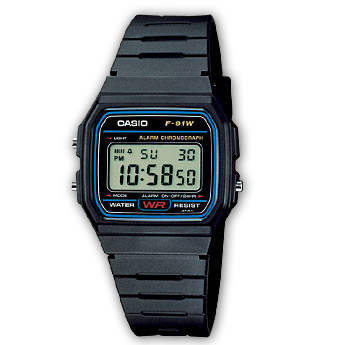
On the way here I saw an antique
photograph of the Toural Square, occupying the centre of an apparently
abandoned shop display. The place where I am now, the destination of my
half-leisurely stroll, is the Milenário Café. I’m now sitting at a table by one
of its large windows overlooking the Toural, the main square of the town of
Guimarães, in northern Portugal. Guimarães is known as the cradle of the
country and is also, by the way, the current European Capital of Culture. Much
has been changed in the previous look of the town in order to prepare it for
that event. The Toural, as one of the most iconic sights of the town, was naturally
at the centre of a whirlwind of construction works for quite a long time. It
opened a couple of months ago amid the usual mixed feelings of the locals, with
positive impressions only slightly beating the negative ones. Personally I
liked it, but then I’m not a local, so my opinion doesn’t really matter much
for the point I’m trying to make here.
People from Guimarães (the vimaranenses) like to think of their
town and themselves as a peculiar case of identity, almost as if they were the
representatives of a different people inhabiting a country within the country:
quintessentially Portuguese, but not mainstream Portuguese. They combine in an
attitude that resembles a sort of local
nationalism an extreme pride in their town and an obstinate sense of
uniqueness. While the former is amply justified by the sheer beauty of the
town, the latter is largely an exaggeration. In fact, most cultural traits of
Guimarães have, in one form or another, equivalents in most comparable
Portuguese towns, at least the northerly ones.
The history of the Toural is a good
example of that. Originally, and judging from its name, it must have been the
place of cattle fairs. However, old photographs already show the typical
Portuguese square of the nineteenth century: neat, with a love of detail and
closed. The entrance to the inner part of it was paid, thus making the place an
exclusive of the better-off classes. The majority of the people would just stay
outside staring at the Sunday stroll of the bourgeoisie. Public space was then
a perfect symbol of society, its carefully marked social divisions echoing the
God-given order of things.
Then the iron fence disappeared, and with it the social prestige of the centre of the square. The benches were now
available to everyone, as well as the shade thrown by the trees, but only
retired elderly people sat there. The square was consciously becoming a place of
memory, a symbol of what the town no longer was. Those were the days of
democratisation, of economic growth, of high buildings, big roads and shopping
centres. A modern monument then occupied the place where previously there had been a fifteenth-century water
fountain, its electrically powered jets of water mocking its predecessor. The
advent of the era of memory, culminating in the classification of the historic centre of
Guimarães by the UNESCO, can hardly disguise that everywhere memory was being wilfully
shunned. Real memory, and not the cheap imitation sold to tourists, was now abandoned
on the fringes of society, the exclusive property of a new kind of socially
excluded people, the elderly.
Now things seem to be changing
again, and the Toural along with them. The fifteenth-century water fountain has returned, the
electrically powered water jets have vanished along with most trees. The
benches have been relegated to a discrete an uninviting corner of the square,
as there wasn’t enough courage to get rid of them altogether. The black and
white patterns of the traditional Portuguese cobblestone walkways were replaced
by some inconsequent lines casually drawn on the floor. The square has lost
many of the features that made it a cosy place where to stay, in fact, that
made it a place at all. Now people
pass through it, more or less hurriedly depending on whether they are locals or
tourists. The new Toural gives the town a cosmopolitan outlook, the uneven
façades of the buildings adding the necessary local taste to an urban landscape
that is essentially and intentionally tasteless. A church, some
nineteenth-century buildings, a granite building that vaguely resembles a rural
manor-house, a remarkably homogenous series of white buildings that bring to
memory the downtown of Lisbon, a fascist style building housing Portugal’s
public bank and a trace of a medieval wall claiming that Portugal was born
here: an historical and architectural composite framing an experience of vague out-of-placeness. I can’t think of a
better metaphor for the times we’re living...
Friday, 3 February 2012
Long Live the King!
Anyone
who has been fortunate to have strolled from Trafalgar Square to the Mall past
the Admiralty Arch on a fine winter’s day, with the sun shining through the velvety
colours of the countless Union Jacks that cheer up the naked trees of St. James’s
Park to see the changing of the guard in Buckingham Palace with the royal
standard flying over it knows that a monarchy is better than a republic. Period!
This
discussion, always latent here, has hit the agenda following the publication of
a manifesto under the title “implement democracy, restore monarchy” by a monarchic
pressure group. Besides being a timely initiative (see previous post), they make
a few valid points, namely the fact that Portugal had a democratic regime while
under the rule of the king, something the republicans couldn’t keep for long. The
republic, implemented by way of a coup, was itself later dismissed by a
mutinous army, paving the way for half a century of reactionary dictatorship. Actually,
the story is quite similar to Spain’s: a very progressive government replaces a
relatively moderate one, only to find that its support basis is too feeble to
resist, thus inviting a yet more radical (reactionary) faction to power. The Portuguese
are simply too much ahead of the Spaniards in that respect: we went through the
same things nearly two decades before them and without a civil war.
Another interesting point they make
derives from the striking parallel between the Portugal of today and that of
the final nineteenth and early twentieth centuries. At the time the country had
had a period of relatively stable growth, mostly fueled by some big investments
in the network of infra-structures. Fontismo
(from the name of the minister who had put the plan into practice, Fontes Pereira
de Melo) may have looked like some sort of avant-la-lèttre
Keynesianism, but it somehow failed to put the country on the path of
sustainable development. Then, as Portugal collapsed under the burden of debt,
a British ship aimed its guns at Lisbon following some clashing territorial claims
with our inconstant ally Britannia
during the scramble for Africa; the ship (they could at least have dignified us
with the sight of a fleet…) didn’t
shoot (it didn’t have to) and Portugal was utterly humiliated, its sovereignty
badly hurt. The king was a collateral victim of all this (he was shot a few
years later), and the monarchy eventually fell amid some mild and merry skirmishes,
mostly in the socially conservative, deeply catholic (at the time) northern
Portugal. Now, as we try to deal with the consequences of Cavaquismo (a modern sort of Fontismo,
from Cavaco Silva’s name, current president of Portugal and prime-minister by
the time when Europe was drowning us in money) and other –isms (such as Guterrismo and Socratismo) we don’t have any sovereignty at all and it is Africa that’s scrambling for us. So, given the
similarities, why not getting rid of the president (in a civilized manner, of
course)?
As it is implied in the starting
lines of this post I’m rather sympathetic towards the monarchic cause, but for
different reasons. As a consequence of academic inclinations I have a certain degree
of intimacy with British culture. On the other hand, my literary frame of mind
renders me quite sensitive to the symbolic aspects of social life. The point is
that the Portuguese republican institutions have failed to function as a solid
symbolic reference, one strong enough to guide people in times of trouble. We really
don’t look up at anything for comfort; we just look at each other, usually in jealousy,
suspicion and resentment. The manifesto hints at those reasons, but leaves them
largely unexplored, diluting them in the idea that a king is good because he’s
not entangled in party politics. Actually it goes much deeper than that: a king
is not a political entity at all. Historically and culturally speaking there
were kings before there were cities (polis,
in the classical Greek sense). When the task was simply to keep a group
together people looked up to the authority of a king, and not to the
discussions of a parliament. In a slowly fragmenting society, with dissolving
social ties and waning points of reference a king could perhaps be the living
symbol of the unity of the tribe. With
the advantage that since the invention of constitutional monarchy one can have both: unity and diversity, a king and a
parliament.
Objections to monarchy usually stem
from the idea that a king is not democratically chosen by the people: but
neither is the country itself. You don’t choose your parents and you love them
nonetheless. You can’t choose certain things; they choose you instead. And that’s
exactly why they’re so important, precisely because they've made you the object of
their preference, thus rendering you important. If everything was a matter of
choice nothing would matter much: one could always choose something else. The
vague postmodern illusion that identity is a matter of choice entails an uncomfortable
moral void which, in politics, is discernible in the general sense of a lack of
common purpose. In extremis choosing
an identity means having none or, according to the best available option, a
second or third-hand identity.
So, yes, I dream of coming along the
Rua Augusta down to the Terreiro do Paço, gazing at a white and blue flag
flying over the Arch of Triumph there, mirroring fair Lisbon, the azure sea and
the gentle sky.
Wednesday, 1 February 2012
On Power and its Trivialization
Some
days ago, in another
one of his inspired moments of high rhetoric, the President of Portugal Cavaco
Silva said that he was partaking in the terrible sacrifices the Portuguese are
enduring in these times of economic hardships. To prove it he added that his
pensions (note the plural) “won’t almost certainly be enough to pay for his
expenses”. Our president is known (among other things, of course) for his lack
of verbal skills and during his long public life has already got us used to
these amazing utterances. In spite of all that there’s a general feeling here that
this time he has crossed the limits, not the least because he earns more than €
10.000 a month. I know it’s not that much if one compares him to his peers (the
only possible comparison in this situation): but it was him who decided to compare himself with the average
Portuguese pensioner, who earns some € 300. Given the current touchy
disposition of our impoverished country the event immediately caused a wave of
outrage: mostly facebook-based (as outrage almost always is these days), with
one or another more or less humorous initiative of the “a coin to help the
President” sort. I won’t join the chorus, really. I won’t even speculate about
why he may have said such a thing, even conceding that it is all the more
surprising given the fact that he is usually discrete and habitually measures
very well what he says. My point here is that this sort of pseudo-events illustrates
quite well some of the basic malfunctions of our contemporary political systems
as far as the symbolic construction of the notion of power is concerned.
It
is now commonplace to complain about the feebleness of today’s European
political leaderships and to contrast them with the authority and vision of a
Churchill, a de Gaulle or a Jack Delors. In Portugal the most prominent
spokesmen of this point of view is Mário Soares (who obviously includes himself
in the lot of great, charismatic past leaders). But the point is that no one
will let anybody be a charismatic leader nowadays. Charisma has a remarkably
low life-expectancy these days: usually it dies after facing the press and the public
opinion for a few weeks. The democratic demand for transparency as a necessary
pre-requisite for consent has in contemporary society degenerated into the idea
that politicians have to be permanently justifying everything they do. Finally,
television turned it all into a masquerade. Politics is today little more than
a half-serious reality show, in which everybody tries to play his part with the
sole aim of gaining more popularity. Cavaco, for example, has always played the
part of the poor, humble and honest average rural Portuguese, a common man,
even if he is one of the richest men in the country. What’s the problem, one
could ask: after all, there’s an obvious difference between actuality and
representation and the Portuguese media has always been obedient to the
established power in favouring the latter over the former. The problem is when
the masquerade falters, either because of the music that stops playing, or
because the mask itself becomes grotesque (or both, as is the case with
Cavaco).
I
want to make something clear: I obviously believe that politicians have to
justify what they do to the citizens: they just don’t have to do it constantly and not in such subservient
terms. Political power has
degenerated into political marketing;
charisma has wrongly been assumed to be something one can buy from some image
consultancy agency. Trust, the essential constituent of democracy, has vanished
and left in its place an all-too-ready disposition to run after public opinion,
to try to please the common people who always criticize without bothering trying
to understand, who talk about everything without an overall vocabulary of about...
500 words. Really, democracy is
something suitable for enlightened societies, but where are they now? The Enlightenment
has been so long ago... This paradoxical dark age of ready-made communication
and superficial commentaries doesn’t look like a particularly fertile soil for
democracy to flourish. When we measure a man’s political worth not by what he
says, thinks or does but solely by the number of times he appears on TV,
something must be terribly wrong. When power succumbs to mundane trivialization
and authority is sought on the basis of emotional iterations such as Cavaco’s,
then there’s no possibility of leadership. It should moreover be noted that the
Portuguese word for leadership, liderança,
is a neologism, a rather recent one, hastily borrowed from English. We’re
playing with new toys, here: it’s a pity we haven’t read the instructions
manual.
Tuesday, 17 January 2012
Oh, the pangs of acculturation! or "I wish I was a musician..."
Could anyone deliver me from the sheer
affliction of having to write my master’s thesis in Portuguese? I couldn’t
avoid letting this cry of desperation go, today. Really, what’s the point of returning
to my mother language after having read countless books in English, after
having built an entire intellectual roadmap in English, after having actually
thought the whole thing in English? As I write it a question constantly assails
my mind: how the hell I’m I supposed to
write this in Portuguese?! It tortures me to be constrained into constantly
translating myself back into my native language, so much more as I never really
believed in translation in the first place. There’s an Italian aphorism for
this, traduttore, traditore, meaning
that to translate is to betray. So why am I being compelled to constantly betray myself as I try to
render in my native tongue something that originally came to my mind in my
second language?
As I feel the pangs of acculturation
I reach the inevitable conclusion that bilingualism is in fact little more than
a fallacy. There’s no such thing as bilingualism, as you can’t say something in
two languages simultaneously. Anatomically speaking, having two tongues would
be a serious malformation indeed. You may speak several languages, each one at
a time, you may even think that you value all of them equally, but eventually
some favoured one will emerge. Some language will conquer your mind and your
heart. My heart is still divided, but my mind has utterly surrendered to the
incredible plasticity, elasticity and versatility of the English language.
Subscribe to:
Posts (Atom)